
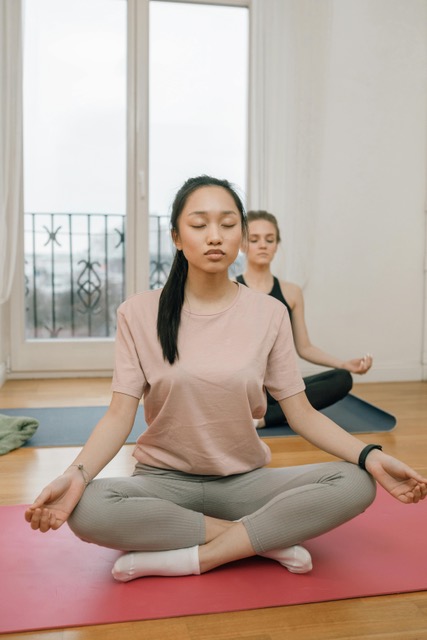
Segmented breathing is a breathing technique that focuses on conscious, localized expansion of the lungs to improve ventilation, oxygenation, and chest mobility
- Position: Sit in easy pose with your spine straight and your hands relaxed on your knees in Gym Mudra
- Benefits: Segmented breathing offers physical and mental benefits. Mentally, it can help reduce stress and anxiety, improve focus, and calm the nervous system.
- Purpose: To improve lung expansion and function, enhance gas exchange, better clearance of mucus, calm the nervous system, reduce anxiety, and enhance mental clarity by controlling and segmenting the breath
- Method: This version often involves dividing the inhalation into several short sniffs or segments, followed by a longer, continuous exhale or short sniffs
- Examples:
- Inhaling in four equal sniffs through the nose and exhaling in one long, continuous breath
- Inhale in two equal sniffs through the nose and exhale in 4 equal sniffs through the nose. You can count the sniffs like this:
Inhale through your nose – Inhale 2
Exhale through your nose – Exhale 2,3,4
Duration: Do 11 times and notice the benefit afterwards (3 minutes)
Now, relax and focus your attention in the middle of your brain and consciously relax it. Relax your spine, your brain and soft your face and notice where the prana (life force) is flowing in your body.
Suggestion: Do this daily Breathwork practice for 7 days and notice any change in your body, mind or spirit. You can do this breath with your partner, children who will love doing it (usually 2 breaths in and 2 breaths out. It is recommended for their growing lung capacity. .



0 Comments